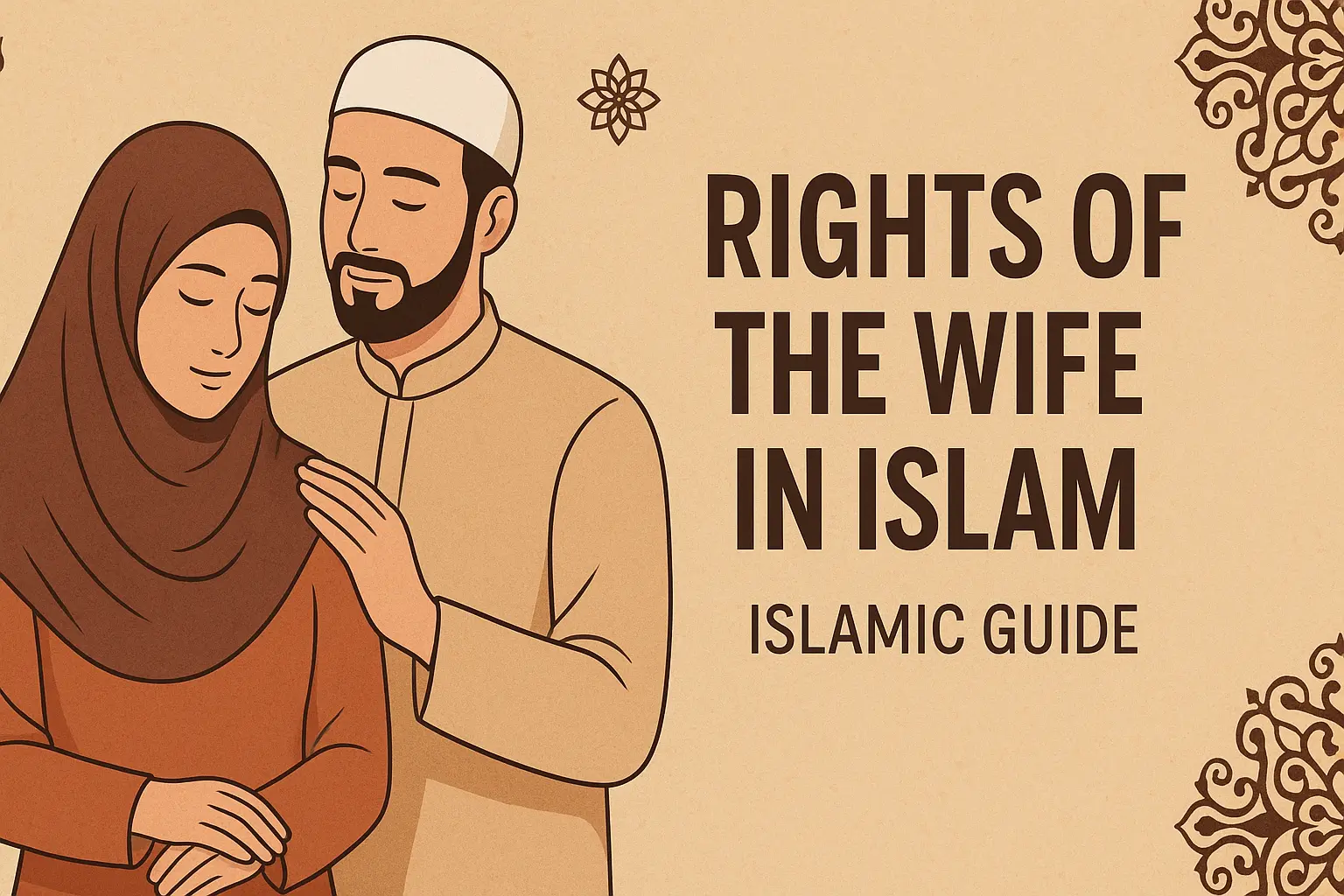
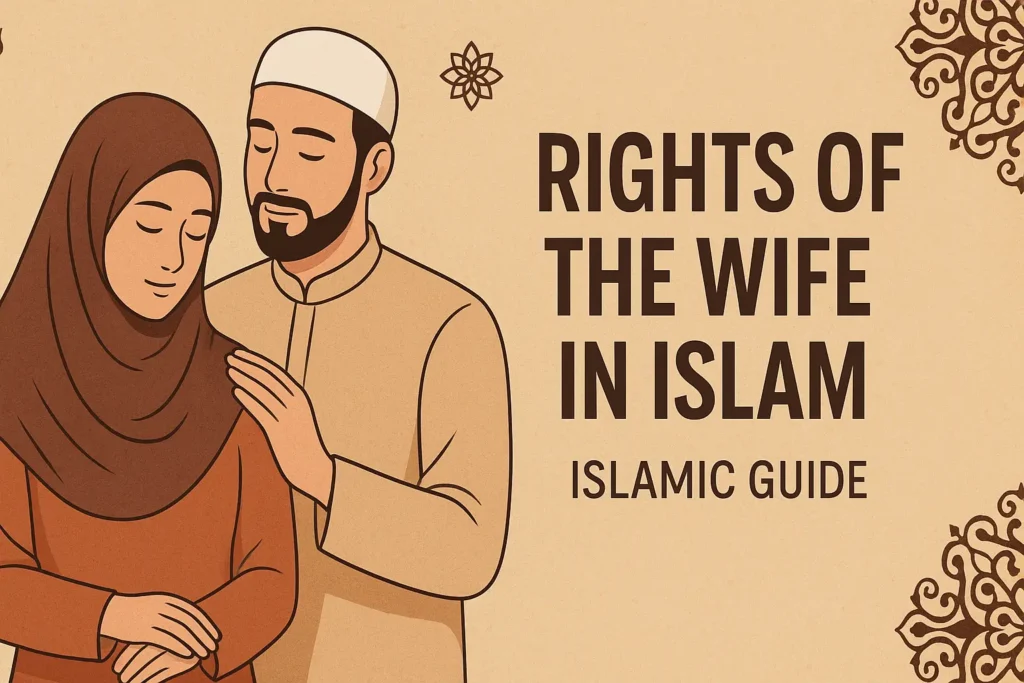
When people talk about women’s rights in Islam, they often assume things based on culture, not the actual teachings of Islam. The reality, however, is completely different. Islam is a fair, balanced, and beautiful religion that gives women immense honour, dignity, protection, and clearly defined rights.
Unfortunately, in many societies, cultural traditions and outdated customs are followed instead of Islamic guidance. As a result, women are often mistreated or restricted in ways that Islam never allowed. These practices come from culture, not from the Quran or the Sunnah.
If you’ve ever wondered what the true rights of a Muslim wife in Islam are, beyond culture and societal customs, you’re in the perfect place. This guide explains everything in a simple, friendly, and easy-to-understand way.
Islamic View of Marriage
Marriage in Islam is not merely a legal contract; it is the foundation of society. The Quran beautifully illustrates this relationship, emphasizing that men are protectors and maintainers of women, while women are protectors and supporters of men.
As the Quran states:
“They are a garment for you, and you are a garment for them.”
(Surah Al-Baqarah 2:187)
Just as a garment provides protection, comfort, and coverage, marriage in Islam is meant to offer compassion, respect, and care between spouses.
Islam clearly defines the rights of a Muslim wife in the Quran and Sunnah, ensuring she is protected emotionally, financially, spiritually, and socially. When a wife feels respected, safe, and loved, the home becomes a place of peace, and that peace grows into the entire community.
Responsibilities vs. Rights
In Islam, the relationship between a husband and wife is built on mutual respect, understanding, and balance. Every wife has certain rights, such as financial security, emotional support, spiritual guidance, and fair treatment, while she also has responsibilities, such as maintaining harmony at home, supporting her husband, and nurturing children within her capacity. But her rights always come first.
Rights and responsibilities go hand in hand. A husband cannot neglect his wife’s rights, and similarly, a wife fulfills her responsibilities without being overburdened.
Rights of a Wife in Islam
1. The Right to Be Treated with Kindness
A peaceful marriage in Islam thrives on emotional connection. Since women are often more emotionally sensitive, one of the most important rights of a Muslim wife is to be treated with love, gentleness, and kindness.
The Prophet ﷺ said:
“The best of you are the best to their wives, and I am the best to my wives.”
(Tirmidhi)
The Prophet Muhammad (peace be upon him) emphasized this greatly, instructing men to treat their wives with care and compassion, and he demonstrated this himself in his own life. In simple words, Islam expects men to be emotionally mature, patient, and kind within the home.
2. The Right to Financial Support (Nafqa)
Another important right of a Muslim wife is rights of the wife in Islam is that she is not financially responsible for herself.
Allah says:
“Men are the caretakers of women, as men have been provisioned by Allah over women and tasked with supporting them financially.”
(An-Nisa 4:34)
Whether she works or not, it is her husband’s responsibility to provide for her needs. This includes essentials such as
- Food
- Clothes
- Housing
- Healthcare
- Daily needs
It is important to note that if a wife earns her own income, that money belongs entirely to her. She has full control over how it is spent, and her husband has no right to use it without her permission.
3. The Right to Emotional Safety and Respect
Islam strictly prohibits men from emotionally, verbally, or physically abusing their wives. A husband’s role is to make the home a place of safety, peace, and comfort—not fear.
The Prophet Muhammad (peace be upon him) never insulted, humiliated, or harmed any of his wives. Similarly, Islam does not permit a husband to mock, ignore, threaten, hit, or emotionally hurt his wife in any way.
A husband should honor her dignity and provide her with personal boundaries. No one, including the husband, should invade her private matters without a valid reason.
4. The Right to Mahr (Bridal Gift)
Mahr is a bridal gift that a husband gives to his wife at the time of marriage. It is not a price or a form of payment, but a voluntary gift from the husband to honor and respect his wife. It ensures the wife’s financial security and reflects the husband’s sincere commitment to her. Islam commands that a woman’s Mahr (bridal gift) should be paid on time and fulfilled with respect and honor.
Allah says:
“Give women their bridal gift graciously.”
(Surah An-Nisa 4:4)
The full right to Mahr belongs entirely to the wife; she can save it, invest it, spend it, or never touch it.
5. The Right to Good Intimacy
Islam recognizes physical needs and gently teaches spouses to fulfill each other’s emotional and physical rights respectfully.
Quran says:
“Your wives are a place of sowing of seed for you, so come to your place of cultivation however you wish.”
(Surah Al-baqarah 2:223)
A husband must fulfill his wife’s emotional and physical needs, and not ignore her needs. Intimacy should be mutual, loving, and considerate of each other’s needs. Any form of forced or harmful intimacy is prohibited. A wife’s comfort and well-being always come first.
6. Spiritual Rights of a Muslim Wife
A Muslim woman has the right to freedom of worship. She has the right to maintain her connection with Allah and to practice her faith without any interference. Her husband cannot stop his wife from praying, fasting, giving charity, or practicing her faith.
Quran says:
“O believers! Protect yourselves and your families from a Fire whose fuel is people and stones.“
(Surah At-Tahrim 66:6)
He is responsible for protecting his wife spiritually by teaching, guiding, and supporting her in practicing her religion. That means:
- Letting her pray
- Encouraging her to learn
- Helping her attend Islamic classes
- Providing an environment where she can worship
7. The Right to Fair Treatment (In Case of Polygamy)
Islam permits a man to have more than one wife, but it sets strict and clear rules for this practice. If a man chooses to marry multiple wives, he is required to treat all of them fairly and justly, providing
- Equal time
- Equal financial support
- and emotional care to each.
Allah commands:
“If you fear you cannot be just, then marry only one.”
(Surah An-Nisa 4:3)
Justice between wives is not easy, which is why Islam emphasizes fairness and equality in every aspect of the relationship. While having a single wife is simpler and recommended, if a man has multiple wives, he must ensure that all are treated with equal respect, care, and consideration.
8. The Right to Divorce If Needed
If the relationship between a wife and her husband becomes troubled or unbearable, Islam grants the wife certain rights. She has the right to seek a divorce (Talaq or Khula, depending on the situation). Through Khula, a wife can request separation from her husband, and it ensures her safety, dignity, and well-being.
Islam protects a woman’s physical and emotional security and emphasizes that she should not be forced to remain in a harmful or unsafe marriage. The religion prioritizes the wife’s protection, rights, and overall safety throughout her life.
9. Rights of a Wife Regarding Her Household Duties
In Islam, a wife is not obligated to perform household duties beyond her capacity, and she has the right to respect, support, and understanding from her husband. The responsibility of running the household is a shared duty.
Islam emphasizes fair treatment and kindness. Islam does not force a wife to cook, clean, serve in-laws, or do housework. These are acts of love—not obligations. Her role is one of partnership, respect, and cooperation, not servitude.
Justice between wives is not easy, which is why Islam emphasizes fairness and equality in every aspect of the relationship. While having a single wife is simpler and recommended, if a man has multiple wives, he must ensure that all are treated with equal respect, care, and consideration.
Conclusion
The rights of a Muslim wife in Islam are meant to ensure dignity, respect, and balance within the marriage. When husbands and wives honor these rights, their relationship flourishes with love, trust, and understanding. Islam encourages fairness, compassion, and mutual support, making marriage a source of peace and happiness for both partners.